Elemental sulfhur and its essential role as a natural corrector of agricultural soil conditions
Beyond its integral natural properties in the field of agriculture, as a fertiliser, biostimulant and fungicide, elemental sulphur stands out for its ability to correct the natural characteristics of agricultural soil.

- Beyond its integral natural properties in the field of agriculture, as a fertiliser, biostimulant and fungicide, elemental sulphur stands out for its ability to correct the natural characteristics of agricultural soil.
- In soils with high salinity, elemental sulphur allows the washing of salts and the reduction of their electrical conductivity, increasing the natural capacity of plants to absorb the nutrients present in the soil.
- Similarly, in alkaline soils the natural contribution of sulphates, when elemental sulphur is applied, balances its conductivity and improves microbiota levels, unblocking the plant's access to soil macronutrients.
When analysing the extraordinary versatility that sulphur offers as an input for agricultural use, there is no doubt that it can be considered, without a doubt, as one of the substances whose natural composition is most complete and recommended for its potential for improvement. integral part of agricultural crops, given its simultaneous properties as a fertiliser, biostimulant and solution to help generate an environment that protects crops against pests and diseases.
From this initial reflection, today we want to take advantage of the commemoration of World Soil Day, which is celebrated annually every December 5, to highlight the extraordinary applicability that elemental sulphur offers to optimise the existing conditions in the different types of soil. agricultural, actively contributing to improving, in an effective way, the natural properties of the soil and its adaptation to what the different plant varieties require of it.
In this sense, the differentiating factor of elemental sulfur lies in its role as an essential nutrient to contribute to greater development of crops, both in qualitative and quantitative terms, thanks to its ability to act as a natural corrector of saline and alkaline soils.
Thus, in those soils that are characterised by a high level of salinity, this aspect has a negative influence in terms of an increase in its conductivity, hindering the plant's ability to carry out its natural processes of water and nutrient absorption, in addition to contributing to the destructuring of the soil due to the saturation of its clay components.
When this occurs, elemental sulphur becomes an essential element to help the soil recover in a completely natural way, with ideal conditions for the development of crops.
The action of the thiobacteria present in the soil on the application of elemental sulphur carried out favours its natural transformation into hydrogen protons and sulphate ions, which in contact with the sodium and chloride of the soil salts transform them into two highly soluble compounds, such as hydrochloric acid and sodium sulphate.
This reaction is essential to facilitate the washing of salts from the soil and the reduction of its electrical conductivity, essential to increase the natural capacity of plants for the absorption of nutrients present in the soil, which is blocked in an environment marked by excessive salinity and conductivity.
On the contrary, when agricultural soil shows high alkalinity, a natural blocking process of its nutrients occurs, especially in the case of phosphorus and iron.
In this situation, the reaction caused by elemental sulphur in its contact with soil bacteria stands out for its capacity for the natural contribution of sulphates to agricultural soil, which is of great importance to reduce its alkalinity (or pH), balance its conductivity and increase the microbiota, unlocking the plant's access to the different macroelements present in the soil.
In this sense, unlike the application of sulphur using sulphates, which leaches more quickly, thus losing their effectiveness, elemental sulfur has the added benefit of maintaining its natural capacities for a considerably longer period, thus allowing these positive effects for the correction of saline and alkaline soils tosulphur develop progressively and with greater continuity over time.
Consequently, elemental sulfur acquires a basic role in favouringsulphur the generation of a beneficial environment for the development and improvement of agriculture in the different soil scenarios that a crop may face, given its potential as a natural corrector of the conditions it offers. the agricultural soil to the plant.
Related products
Biostimulants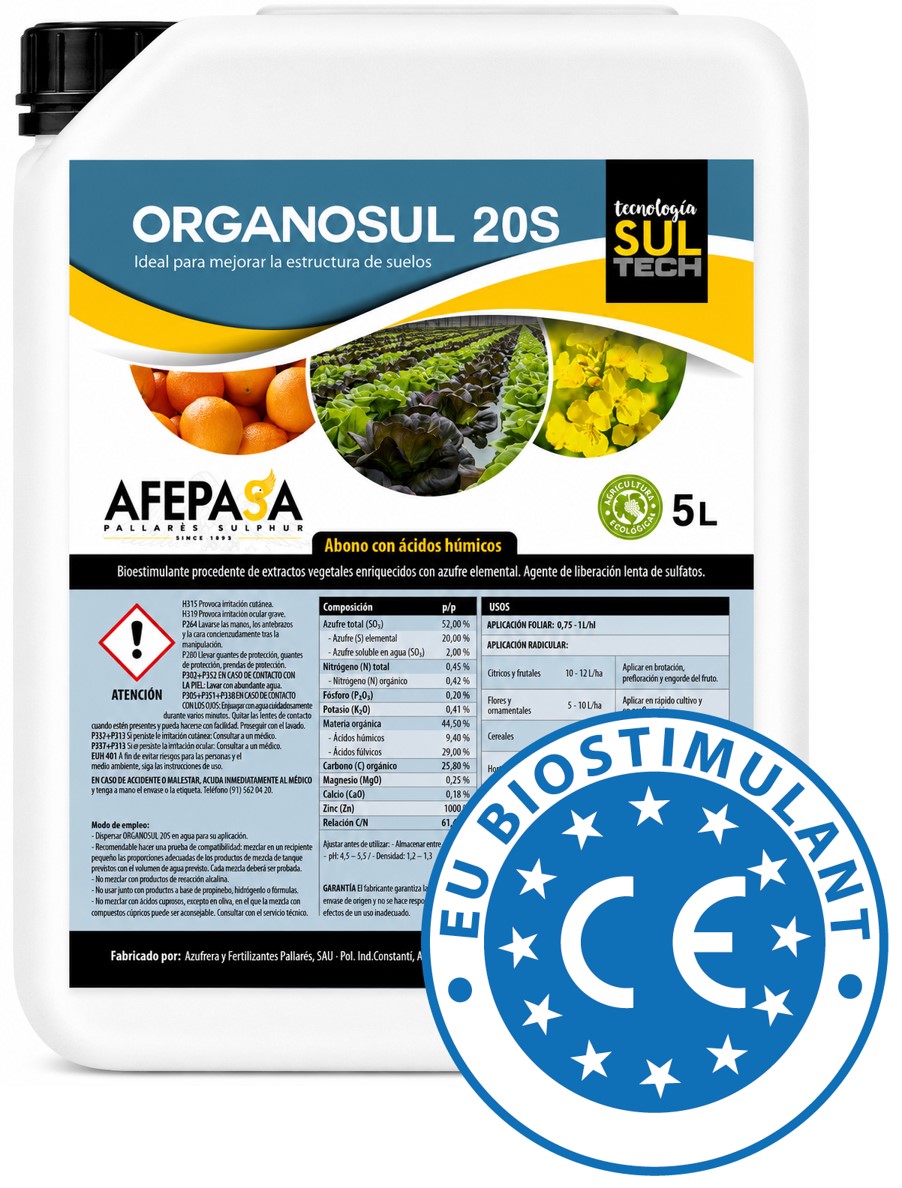 BIOSTIMULANTS
ORGANOSUL 20S
Biostimulant powered by Sultech® technology and humic acids, designed to improve soils…
 BIOSTIMULANTS
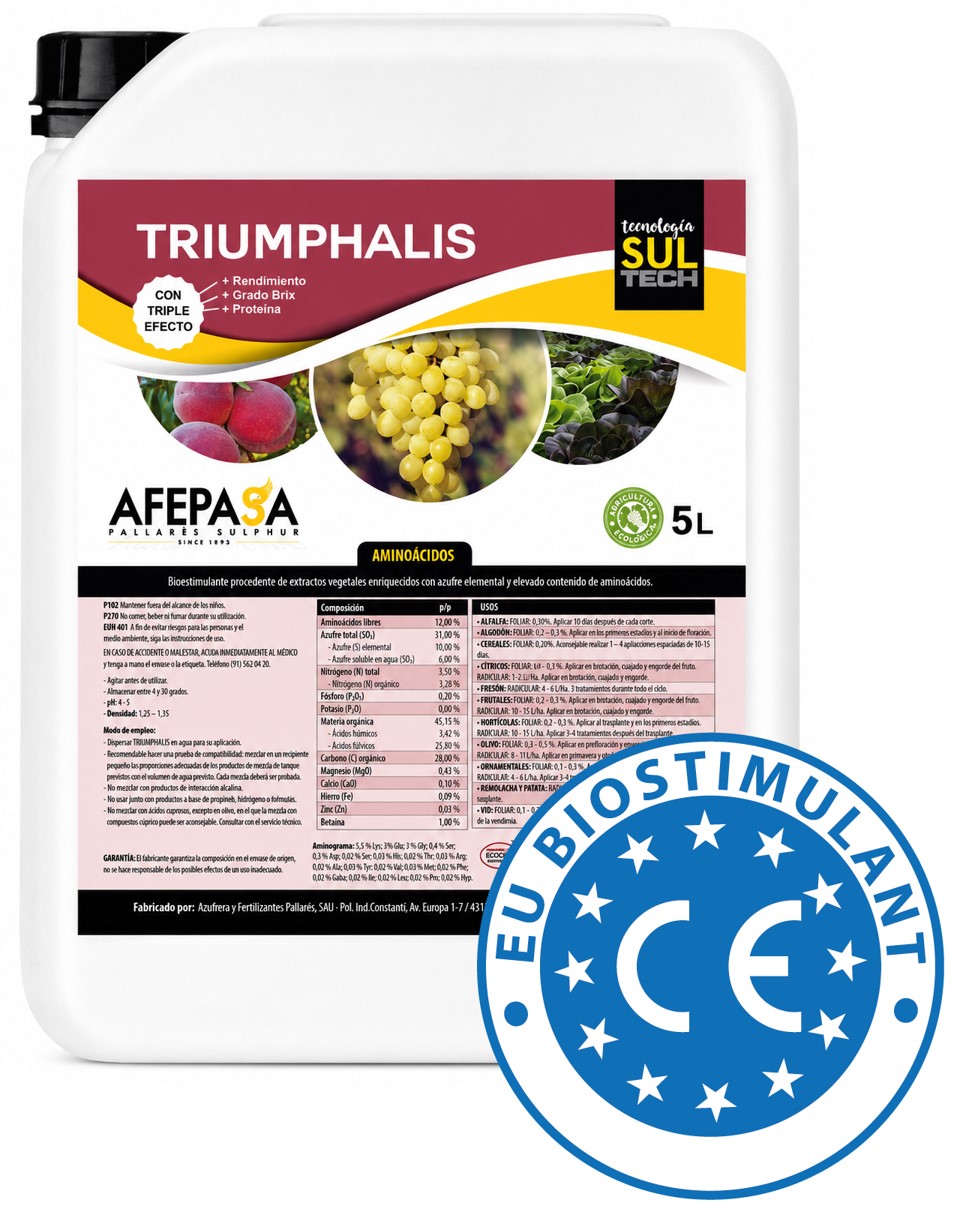
TRIUMPHALIS
Foliar biostimulant powered by Sultech® technology, combining plant-derived free amino…
 BIOSTIMULANTS
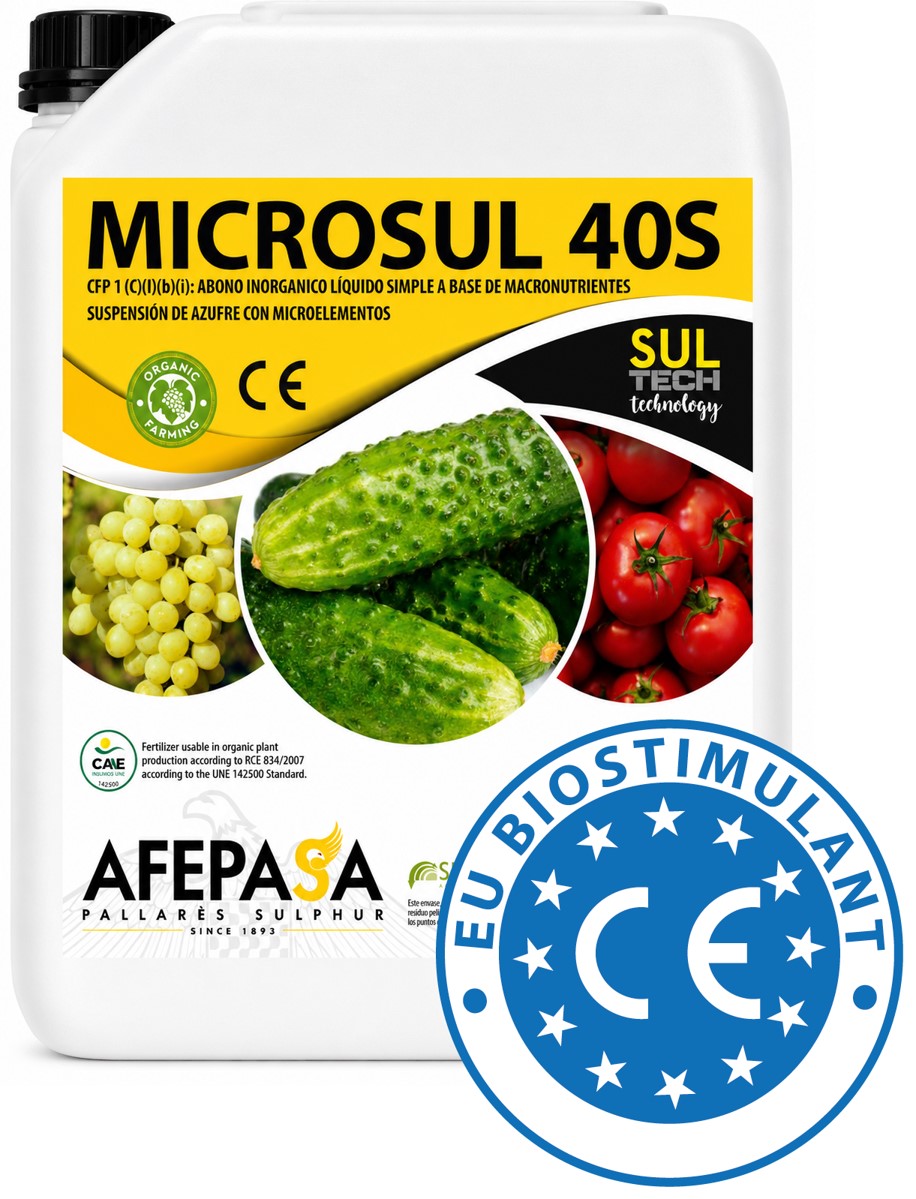
MICROSUL 40S
Biostimulant featuring Sultech® technology, specifically designed to leach excess salts…
 FERTILIZERS
AFESOL
Semi-spherical soil amendment with rapid action. The sulphur is blended with clay, which…